- sales@robatodigitals.com
- 124 Westwood Dr, Burnside VIC 3023

Long-Form SEO Content Writing: A Complete Guide to Ranking and Engagement
05
May
Long-Form SEO Content Writing: A Complete Guide to Ranking and Engagement
Long-Form SEO Content Writing: A Complete Guide to Ranking and Engagement
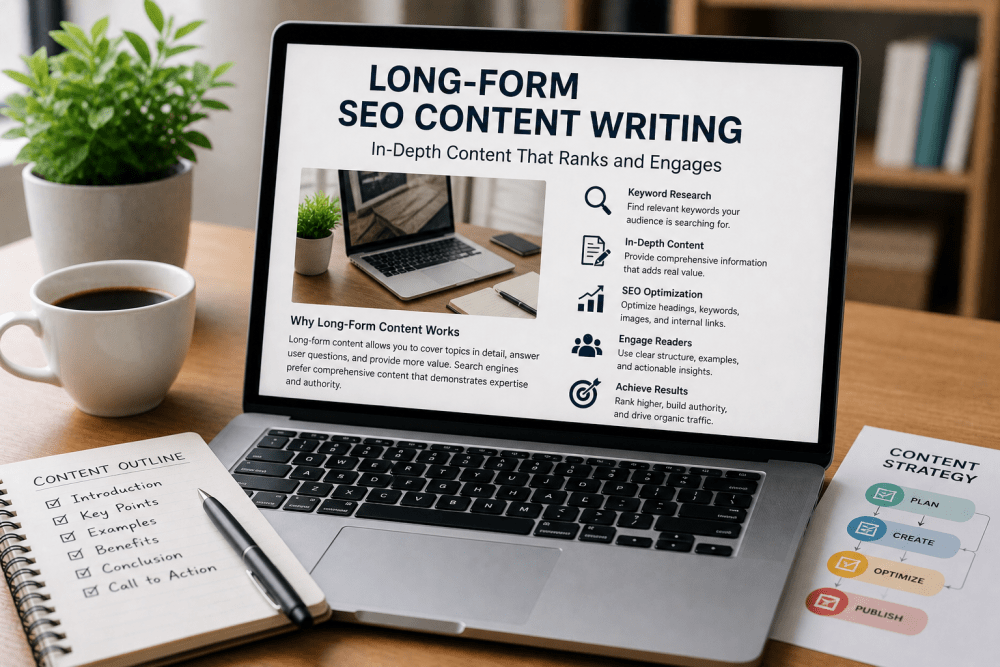
In today’s content-driven digital world, Long-Form SEO Content Writing has become a powerful strategy for businesses that want to improve search rankings and build authority. Short content may grab attention quickly, but long-form content delivers depth, value, and stronger engagement. It allows businesses to answer user queries in detail while improving visibility across search engines.
Insights from experienced content strategists show that well-structured long-form content not only ranks better but also keeps readers on the page longer, increasing the chances of conversion.
Why Long-Form Content Outperforms Short Posts
Long-form content typically covers topics in a more detailed and meaningful way. This helps both users and search engines understand the subject better.
Key advantages include:
Higher chances of ranking for multiple keywords
Increased time spent on page
Better user engagement
More opportunities for internal linking
When users find everything they need in one place, they are less likely to leave your site.
Start with Strong Keyword Research
Effective Long-Form SEO Content Writing begins with thorough keyword research. Choosing the right keywords ensures your content reaches the right audience.
Focus on:
Primary keywords with clear intent
Related secondary keywords
Question-based search queries
Long-tail variations
A well-planned keyword strategy helps your content rank for multiple search terms, increasing visibility.
Structure Your Content for Easy Reading
Even the most valuable content can fail if it is difficult to read. Structure plays a key role in keeping users engaged.
Best practices include:
Using clear headings and subheadings
Writing short paragraphs
Adding bullet points where needed
Maintaining logical flow
A clean structure improves readability and makes it easier for users to navigate your content.
Deliver Value Through In-Depth Information
Long-form content should provide real value, not just length. It should answer questions, solve problems, and offer insights.
Include:
Detailed explanations
Practical examples
Actionable tips
Relevant data or insights
Content that genuinely helps users builds trust and encourages them to return.
Optimize for SEO Without Overloading Keywords
SEO is essential, but keyword stuffing can harm your rankings. The goal is to maintain a natural flow.
Focus on:
Placing keywords in headings and key sections
Writing engaging meta descriptions
Using internal links
Optimizing images with alt text
Balanced optimization ensures your content is both user-friendly and search engine friendly.
Keep Users Engaged from Start to Finish
Engagement is a major factor in content success. Long-form content should keep readers interested throughout.
Ways to improve engagement:
Start with a strong introduction
Use storytelling elements
Break content into sections
Add clear transitions
Engaging content reduces bounce rates and improves overall performance.
Update Content to Stay Relevant
SEO is not a one-time effort. Content needs to be updated regularly to maintain its effectiveness.
Update your content by:
Adding new information
Refreshing outdated data
Improving readability
Optimizing for new keywords
Regular updates signal to search engines that your content is fresh and relevant.
Turn Content into a Long-Term Asset
Long-form content is not just a blog post. It is a long-term asset that continues to drive traffic and generate leads.
With the right strategy, businesses can:
Build authority in their niche
Attract consistent organic traffic
Improve brand credibility
Increase conversions
The effort invested in long-form content often delivers results over an extended period.
Final Thoughts
Long-Form SEO Content Writing is a proven strategy for businesses that want to grow their online presence. By combining detailed information, smart keyword usage, and strong structure, businesses can create content that ranks well and delivers value.
Consistency, quality, and continuous improvement are key. When done right, long-form content becomes a powerful tool for sustainable growth.